
Is Solar Still Worth It in Texas in 2026? What Changed After the Federal Tax Credit Ended
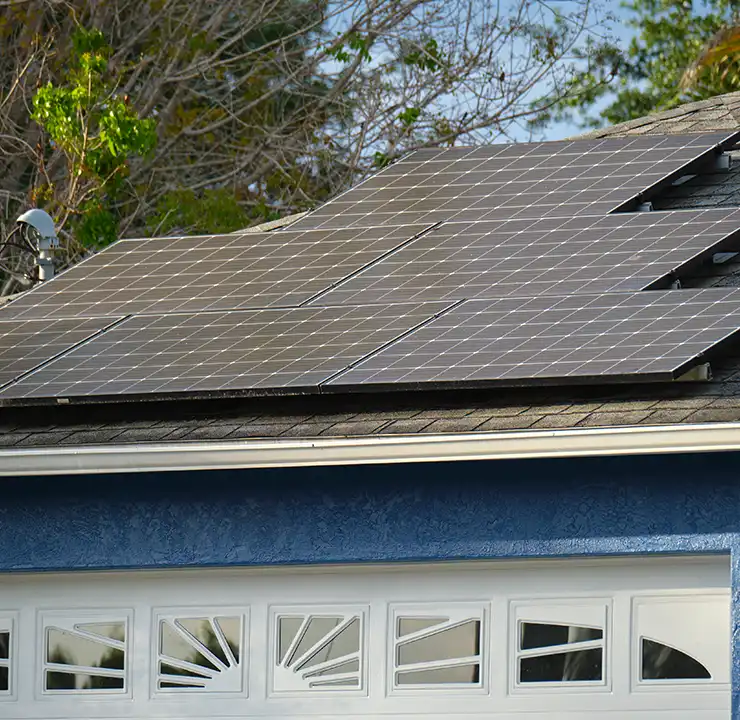
If you were told to “hurry before the solar tax credit ends,” you may be wondering whether solar still makes financial sense in Texas in 2026.
The short answer is yes, solar can still be worth it for many DFW homeowners, but not every home, roof, electric plan, or financing option will pencil out.
The 30% federal Residential Clean Energy Credit is no longer available for residential solar property placed in service after December 31, 2025, according to the IRS. That changes the math, but it does not automatically make solar a bad investment.
In North Texas, strong sun, high summer cooling demand, and electricity rates around 15 cents per kilowatt-hour can still support long-term savings. The key is to evaluate the complete project honestly, starting with your roof.
What changed after the federal solar credit ended?
Before 2026, eligible homeowners could generally claim a federal tax credit worth 30% of qualifying solar installation costs. A $22,000 system could have produced a potential $6,600 credit, subject to applicable tax rules.
For systems completed in 2026, you should assume there is no new federal residential solar credit. The IRS states that the credit is not available for property placed in service after December 31, 2025. Paying a deposit or signing an agreement before the deadline does not necessarily qualify a project if installation was completed afterward.
That means your 2026 decision should be based on the system’s actual cost, expected production, utility plan, financing terms, and how long you expect to stay in your home, not on a tax-credit sales pitch.
If you had a qualifying system installed by the end of 2025 and still have unused credit, different carryforward rules may apply. Speak with a qualified tax professional about your individual situation.
What Texas homeowners can still use in 2026
The federal credit ended, but Texas homeowners still have several factors working in solar’s favor.
Texas property-tax exemption
Texas provides an exemption for the added appraised value associated with qualifying solar or wind energy devices used primarily for on-site energy production. Homeowners generally apply through their local appraisal district using Texas Comptroller Form 50-123.
The form and supporting documents are filed with the appraisal district, not the Texas Comptroller. Deadlines and documentation requirements matter, so confirm the current process with your county appraisal office.
Solar buyback plans
Texas does not require one statewide residential net-metering program. In DFW, your export compensation depends on your retail electric provider and the specific plan you choose.
Some plans may credit exported electricity at a rate below the retail rate you pay for power. Others have monthly caps, rollover rules, fixed charges, or special eligibility requirements.
Before approving a system, ask:
- How much will the provider credit for each exported kilowatt-hour?
- Are credits applied at the retail rate or a lower rate?
- Do credits roll over?
- Is there a monthly export limit?
- What fixed charges remain after installation?
- Can the plan terms change?
Solar usually performs best when you use a large portion of the energy your system produces instead of sending most of it back to the grid.
A realistic DFW payback example
Let’s use a straightforward example rather than a best-case sales presentation.
Assume:
- System size: 10 kilowatts
- Installed cost: $22,000
- Estimated annual production: 14,000 kilowatt-hours
- Retail electricity value: 15.5 cents per kilowatt-hour
- Self-consumed energy: 60%
- Exported energy: 40%
- Export credit: 6 cents per kilowatt-hour
- Federal tax credit: $0
Your estimated annual value could look like this:
- 8,400 kWh used directly at 15.5 cents: $1,302
- 5,600 kWh exported at 6 cents: $336
- Estimated annual energy value: $1,638
At that rate, the simple payback period is approximately 13.4 years before financing costs, maintenance, roof work, insurance changes, or system degradation.
If your household uses more energy during daylight hours, receives a stronger export credit, or experiences higher electricity rates, payback may improve. If your roof has shade, your electric usage is low, or your loan carries a high interest rate, payback may take longer.
A basic 25-year calculation would produce approximately $40,950 in gross energy value at the same annual savings, leaving about $18,950 before other costs. Electricity prices, system production, and utility plans will change over time, so this is only a planning example, not a guarantee.
The right quote should show you conservative and optimistic scenarios.
Never install solar on a roof that needs replacement
This is the step that rushed solar sales conversations often overlook.
Solar panels can last for decades. Your roof may not. If you install panels on an aging roof and need a replacement several years later, the system may need to be removed and reinstalled. That can add cost, delay, and unnecessary disruption.
Before solar installation, your roof should be evaluated for:
- Remaining service life
- Hail or storm damage
- Shingle condition
- Roof decking
- Flashing and penetrations
- Ventilation
- Structural concerns
- Shade and roof orientation

At RUOFF Roofing & Restoration, we assess the roof before recommending a solar path. Our team uses modern techniques and inspection tools to identify concerns before they become expensive problems.
As a roofing company that also provides solar panel installation, we can help you determine whether your roof is solar-ready, or whether repairs or replacement should happen first.
Explore our free roof inspection before signing a solar agreement.
When solar is still likely worth it in DFW
Solar deserves a serious look when:
- Your average electric bill is consistently $130 to $150 or more.
- You have substantial summer air-conditioning usage.
- Your roof receives strong sunlight with limited shade.
- You expect to remain in the home for at least 10 years.
- You can use cash or secure reasonable financing.
- Your retail electric provider offers a competitive solar buyback plan.
- The system is sized around your real annual usage.
- Your roof has enough remaining life to support the solar system.
DFW’s strong solar resource is a major advantage. For planning purposes, many Texas solar models use production of roughly 1,400 kilowatt-hours per kilowatt of installed capacity per year. Your actual output will depend on roof direction, pitch, shading, equipment, weather, and installation quality.
When solar may not be the right choice
Solar may be less attractive when:
- Your average electric bill is below $80 to $100 per month.
- Your roof is heavily shaded.
- You plan to move within five to seven years.
- Your roof needs replacement soon.
- Your buyback plan pays very little for exported energy.
- Financing costs absorb most of the expected savings.
- The proposal depends on a tax credit you cannot claim.
- The salesperson cannot clearly explain system size, production, fees, and payback assumptions.
A trustworthy solar proposal should still make sense when you remove the federal credit and use conservative export compensation.
How to compare solar installers and DFW roofing contractors
When comparing a roofing company in Dallas, solar installer, or combined provider, look beyond the lowest advertised monthly payment.
Ask for:
- A written system design showing estimated annual production.
- A complete price with no hidden costs.
- A roof assessment before panel installation.
- Financing terms that show total repayment, not only the monthly payment.
- Equipment details and manufacturer warranties in writing.
- Permit and interconnection responsibilities.
- A realistic payback estimate without the federal credit.
- A clear plan for future roof repairs or replacement.
The best roofing company in Dallas for a solar project should understand both systems: the roof protecting your home and the equipment generating your electricity.
RUOFF Roofing & Restoration brings more than 25 years of roofing and restoration experience to residential, commercial, and multi-family properties throughout North Texas and DFW. We provide transparent pricing, top-quality materials, streamlined project coordination, and a roofing-first approach that helps protect your property before solar begins.

A straightforward way to get started
You do not need to commit to solar during your first conversation. Start with information.
Step 1: Gather your electric bills
Collect 12 months of usage and billing data. Your annual kilowatt-hour usage is more useful than one unusually high summer bill.
Step 2: Inspect the roof
Confirm that the roof can support the project for the expected life of the solar system. If repairs or replacement are needed, address those items first.
Step 3: Review the electric plan
Understand how your provider handles solar exports, credits, fees, and rollover balances.
Step 4: Compare the complete numbers
Review the cash price, financing cost, expected production, annual savings, payback period, and long-term assumptions.
Step 5: Choose a provider that handles the details
Your installer should explain the process clearly, answer questions quickly, and remain accountable from inspection through installation.
At RUOFF, our solar process includes consultation, roof evaluation, system planning, installation coordination, and ongoing support. We also provide roofing services across North Texas and DFW when your property needs repairs, replacement, or storm restoration before solar begins.
So, is solar worth it in Texas in 2026?
For many DFW homeowners, solar is still worth considering, but only when the project is based on honest math and a solar-ready roof.
The expired federal credit means you should expect a longer payback than some older advertisements promised. However, strong sunlight, high cooling demand, available property-tax protection, and potential long-term electricity savings can still make solar a sensible investment for the right home.
Do not let anyone pressure you into signing because of a deadline. Schedule a roof-first consultation, request transparent numbers, and make the decision that fits your property and your budget.
Start with a free roof inspection or contact RUOFF Roofing & Restoration to discuss your options. We’ll help you understand whether solar makes sense, and if it does, we’ll help you build the project on a strong foundation.
Contact RUOFF Roofing & Restoration
Ready to take the next step? Our team is here to make the process simple, clear, and stress-free.
- Phone: 972-430-3948
- Website: www.ruoffroofing.com
- Email: seth@ruoffroofing.com
- Facebook: https://www.facebook.com/956738274198589
- Instagram: https://www.instagram.com/ruoffroofing
Schedule your inspection today and get expert guidance you can trust every step of the way.